Artificial intelligence is transforming how content is created.
From blog posts and marketing copy to emails and social media, AI writing tools are making it faster than ever to produce content at scale.
But there’s still a major question:
Is AI writing better than human writing?
The answer isn’t as simple as choosing one over the other.
Both AI and human writing have strengths—and weaknesses. The real advantage comes from understanding when to use each and how to combine them effectively.
In this guide, you’ll learn the differences between AI writing and human writing, when each works best, and how to use both together for better results.
What Is AI Writing?
AI writing refers to content generated by artificial intelligence systems using natural language processing (NLP) and machine learning.
These systems analyze large amounts of text data and generate responses based on patterns, context, and probability.
AI writing tools can:
- Generate blog posts
- Summarize information
- Create marketing copy
- Answer questions
- Rewrite and edit content
They are fast, efficient, and capable of producing large amounts of content in a short time.
What Is Human Writing?
Human writing is content created by people using their knowledge, experience, and creativity.
Unlike AI, humans:
- Understand emotion and context deeply
- Use personal experiences
- Apply cultural awareness
- Create original insights
Human writing is what gives content personality, depth, and connection.
It’s not just about words—it’s about meaning.

Key Differences Between AI Writing and Human Writing
Understanding the differences helps you decide when to use each.
Speed and Efficiency
AI writing is significantly faster. It can generate content in seconds.
Human writing takes more time but allows for deeper thought and refinement.
Creativity and Originality
AI can generate ideas, but it relies on patterns.
Humans create truly original content based on experience and imagination.
Accuracy and Context
AI can sometimes produce incorrect or misleading information.
Humans are better at understanding nuance and verifying accuracy.
Emotional Connection
AI struggles with emotion and empathy.
Human writing connects with readers on a deeper level.
Scalability
AI can produce large volumes of content quickly.
Human writing is harder to scale but often higher quality.
When AI Writing Works Best
AI writing is extremely useful in certain situations.
1. Content at scale
If you need to produce a large amount of content quickly, AI is the best option.
2. First drafts and outlines
AI is great for generating:
- Blog outlines
- Rough drafts
- Content ideas
3. Data-driven content
AI can process large amounts of data and turn it into readable content.
4. Repetitive tasks
AI works well for:
- Product descriptions
- Meta descriptions
- Summaries
5. Overcoming writer’s block
AI can help generate ideas and get you started.

When Human Writing Works Best
There are areas where human writing is essential.
1. Storytelling and brand voice
Humans create stories that connect with readers.
2. Thought leadership
Expert insights and unique perspectives require human experience.
3. Emotional and persuasive content
Content that builds trust and connection needs a human touch.
4. Complex topics
Humans are better at explaining nuanced or technical subjects clearly.
5. Editing and refinement
Final content quality almost always requires human input.
The Hybrid Approach: Using AI and Human Writing Together
The best results don’t come from choosing one over the other.
They come from combining both.
A hybrid approach allows you to:
- Use AI for speed and structure
- Use humans for creativity and quality
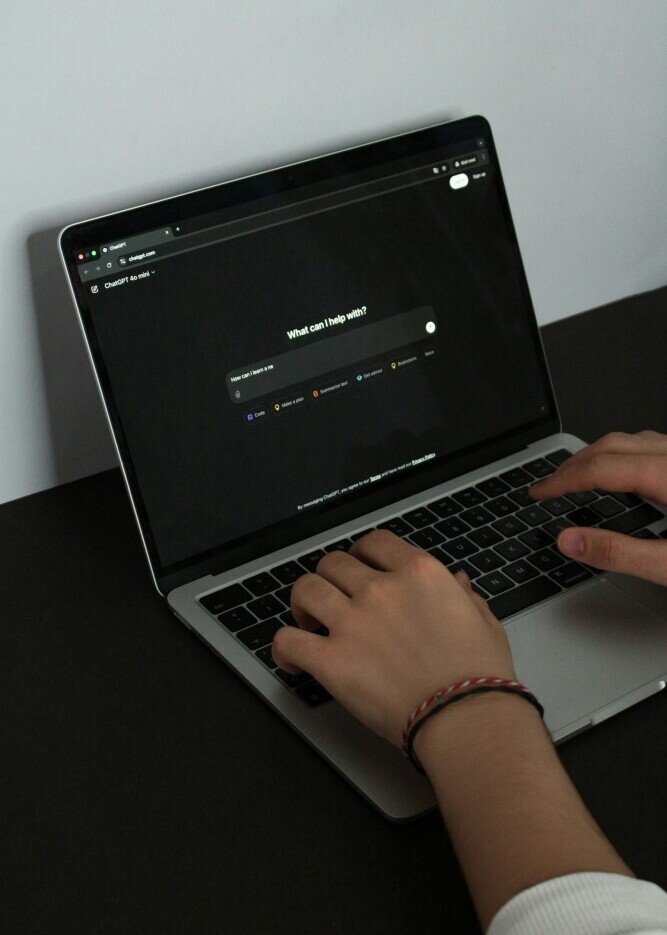
Example workflow
- Use AI to generate ideas and outlines
- Use AI to create a draft
- Edit and refine the content manually
- Add personal insights and examples
- Optimize for SEO
This approach gives you the best of both worlds.
Real-World Use Cases
Here’s how AI and human writing work together in practice.
Blogging
AI helps generate outlines and drafts.
Humans refine the content, add insights, and improve readability.
Marketing
AI generates ideas and variations.
Humans craft messaging and emotional appeal.
Business content
AI handles data and structure.
Humans ensure clarity and accuracy.

Pros and Cons of AI Writing
Pros
- Fast content creation
- Scalable
- Helps with brainstorming
- Reduces workload
Cons
- Can lack originality
- May produce inaccuracies
- Needs editing
- Limited emotional depth
Pros and Cons of Human Writing
Pros
- Authentic and engaging
- Emotionally impactful
- More accurate
- Builds trust
Cons
- Time-consuming
- Harder to scale
- Requires more effort
Common Mistakes When Using AI for Writing
Many people misuse AI tools.
Avoid these mistakes:
Publishing AI content without editing
This leads to generic, low-quality content.
Over-relying on AI
AI should support—not replace—your thinking.
Ignoring structure
Even AI content needs clear organization.
Not fact-checking
AI can be wrong. Always verify.
How to Get the Best Results From AI Writing
To use AI effectively:
- Be specific with prompts
- Break content into sections
- Always edit and refine
- Add your own insights
- Focus on clarity and usefulness
The better your process, the better your results.
Is AI Writing Good for SEO?
Yes—but only if used correctly.
AI can help:
- Generate content quickly
- Structure posts
- Improve readability
But SEO success still depends on:
- Search intent
- Content quality
- User value
Search engines prioritize helpful content—not just fast content.

The Future of AI and Human Writing
AI writing tools are improving rapidly.
We’re seeing:
- Better language understanding
- More natural outputs
- Advanced customization
But human writing will always be essential.
The future isn’t AI replacing humans.
It’s AI enhancing human creativity.
Which Should You Use?
If you’re deciding between AI and human writing, here’s a simple rule:
Use AI for:
- Speed
- Structure
- Scaling content
Use human writing for:
- Creativity
- Emotion
- Final quality
And combine both whenever possible.
AI Writing vs Human Writing: Side-by-Side Comparison
To make the differences clearer, here’s a direct comparison between AI and human writing.
AI writing is best when speed and efficiency matter. It can generate content quickly, handle repetitive tasks, and scale production without slowing down.
Human writing, on the other hand, excels in creativity, emotional depth, and originality. It’s better suited for storytelling, persuasive content, and building a strong connection with readers.
AI is consistent but can sometimes feel generic. Human writing is less scalable but far more personal and engaging.
In most cases, the best approach isn’t choosing one—it’s combining both.
AI Writing vs Human Writing for SEO
One of the biggest questions bloggers have is whether AI or human writing performs better for SEO.
The truth is, both can work—but only if used correctly.
AI writing can help with:
- Generating keyword-rich content
- Structuring posts
- Creating outlines quickly
However, AI alone often lacks depth and originality, which are critical for ranking.
Human writing improves SEO by:
- Adding unique insights
- Creating more engaging content
- Increasing time on page
Search engines prioritize helpful content that satisfies user intent.
The best SEO results come from combining AI efficiency with human expertise.

When NOT to Use AI Writing
AI is powerful, but it’s not always the right tool.
Avoid using AI when:
- You need strong emotional impact
- You’re writing personal or opinion-based content
- Accuracy is critical (medical, legal, financial topics)
- You’re building a unique brand voice
In these cases, relying too heavily on AI can hurt content quality and credibility.
When NOT to Rely Only on Human Writing
While human writing is powerful, there are situations where doing everything manually slows you down.
Avoid relying only on human writing when:
- You need to produce large amounts of content quickly
- You’re handling repetitive tasks
- You’re struggling with writer’s block
- You need help organizing ideas
Using AI in these situations can dramatically improve efficiency without sacrificing quality.
A Simple AI + Human Content Workflow
If you want to consistently produce high-quality content, use a simple hybrid workflow.
Start by using AI to generate ideas and outlines.
Next, use AI to create a rough draft of your content.
Then, step in and rewrite sections to improve clarity and tone.
Add your own insights, examples, and personal perspective.
Finally, review and optimize the content for SEO and readability.
This process allows you to move faster while still maintaining quality.

How Businesses Are Using AI and Human Writing Together
Many businesses are already combining AI and human writing to improve their content strategy.
For example, companies use AI to generate product descriptions and blog outlines, then rely on human writers to refine the messaging and ensure brand consistency.
Marketing teams use AI to create multiple variations of ad copy, while human writers select and improve the best options.
Content teams use AI to speed up research and drafting, then apply human expertise to create polished, engaging content.
This hybrid approach allows businesses to scale content production without sacrificing quality.
Does AI Writing Replace Human Writers?
This is one of the biggest concerns around AI.
The short answer is no.
AI doesn’t replace human writers—it changes how they work.
Instead of spending time on repetitive tasks, writers can focus on:
- Strategy
- Creativity
- Storytelling
- High-value content
Writers who learn how to use AI effectively will have a major advantage.
Those who ignore it may fall behind.
Final Thoughts
If you’re still unsure which to use, here’s a simple breakdown.
Use AI when you need speed, structure, and scalability.
Use human writing when you need creativity, emotion, and originality.
Use both when you want the best possible results.
The goal isn’t to replace one with the other.
It’s to use each where it performs best.
AI writing and human writing aren’t competitors—they’re tools.
Each has strengths, and each has limitations.
The real advantage comes from knowing how to use them together.
When you combine AI’s efficiency with human creativity and insight, you create content that is:
- Faster to produce
- Higher quality
- More engaging
That’s the future of content creation.